


Emergent AI: Vibe Code Apps
3.350.00 Reviews
App Specs
- Version
- 1.0.16
- Updated On
- License
- Free
- Downloads
- 100,000+
- Developer
- Emergent Labs
- Categories
- Business
- Platform
- Android
Screenshots
 Analysis by AppCompare
Have you ever wished you could harness the power of AI to transform your music experience? Well, hold onto your headphones because that's exactly what Emergent AI: Vibe Code Apps promises to do. This app is not your average music app; it's a digital maestro that curates soundscapes tailored to your mood and activities. I dove into this app to see if it lives up to the hype, and here's what I found.
What I’d Expect Before Installing
There is an important mismatch to understand before trying it: despite the music-focused experience described below, Emergent AI is a business app from Emergent Labs, built around creating web and mobile apps with AI. Its practical appeal is turning a plain-language idea into a starting point for an app, rather than curating music. I would approach it as an early prototyping tool, not as a playlist service or a finished app builder that removes every technical decision.
The app is free to install and is rated for Everyone. It has a 3.1 average from around 359 ratings, which is a reason to try it with modest expectations rather than assume the process will be effortless. The current version is 1.0.15, and the app has passed 100K installs. Optional in-app purchases are listed at $19.99 per item, so I would check what an item offers before paying. The key question is not simply whether AI can produce a screen; it is whether the result is useful enough to refine into something you would show another person.
From a Rough Idea to a First Test
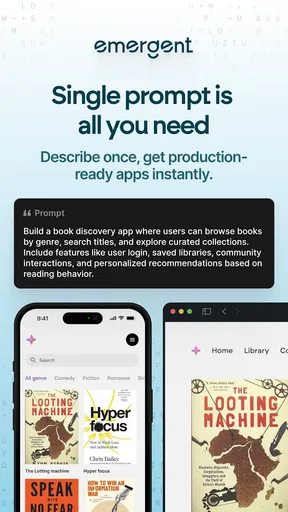
For a first attempt, I’d keep the idea narrow. Instead of asking for a complete business platform, describe one person, one problem, and one useful action. For example: “A simple page for a neighborhood tutor where parents can see subjects, request a lesson, and leave contact details.” That gives the builder a clearer target than a broad prompt such as “make an education app,” and it gives you something concrete to judge when the first draft appears.
Before opening the app, jot down the content the first version needs: the service name, a short explanation, the main action, and any details a visitor must know. This small preparation helps separate problems caused by a vague brief from limits in the generated result. If you are testing a business idea, use sample information rather than real customer details; a prototype should help you think through the flow without becoming an accidental home for sensitive information.
Once a draft is ready, test it as if you were a new visitor. Can you tell what the product does without explanation? Is the main action obvious? Does the sequence make sense on a phone screen? Those questions are more valuable than polishing every color or line of text immediately. I’d make a short list of the two or three biggest issues, then ask for targeted changes one at a time. That keeps the next result easier to assess and makes it less likely that a useful part of the first version gets lost in an overly broad revision.
Who Gets the Most Value
This approach makes the most sense for a solo founder, freelancer, student, or small team that wants to explore an idea before committing to a conventional development project. A tutor could sketch a booking flow, a local shop could test a product catalogue concept, and a community organizer could map out how members might submit requests. In each case, the immediate win is a visible starting point for discussion—not proof that the concept is ready for customers.
Worth Reading Before You Choose

Flipboard Shows What News Apps Must Do Beyond the Feed

Switching to Android Auto Means Rethinking Your Driving Routine

Google Calendar Makes a Crowded Week Easier to Manage

Ludo King Makes the Most of the Minutes Between Plans

Baby Panda World Brings Quick Play to Modern Phones, but Its Game Library Feels Busy

ESPN’s Live Game View Makes Following Close Games Easier
It can also be useful when you have a clear picture of the task but do not yet know how to translate it into a technical specification. Describing the audience and the main action in everyday language is a practical way to begin. I would still treat the generated app as a draft: check every label, verify that forms and buttons behave as intended, and have someone unfamiliar with the idea try it. A convincing-looking screen can hide a confusing user journey.
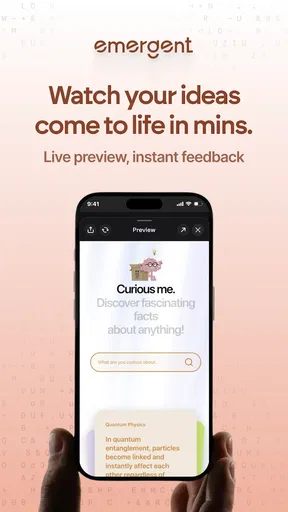
On an ordinary workday, imagine a consultant who wants to stop sending the same service details in long messages. They could try shaping a small information page with a clear description and a contact request, then show it to a colleague on a phone. If the colleague cannot quickly find the service or understand what happens after tapping the action, the prototype has already done useful work by exposing a design problem. That is a realistic first success: learning what needs to change before investing more time.
Where It Fits Among Other Tools
Compared with a no-code website editor, an AI app builder can be a quicker way to turn a plain-language starting point into a draft, especially when you are unsure how to structure the first screen. A conventional visual builder may give you more direct control over layout and styling, but it asks you to make more choices yourself. A developer, meanwhile, is the better option when the project depends on carefully tailored behavior, complex integrations, or production-level reliability. These tools solve different stages of the problem; an AI-generated prototype does not automatically replace either one.
The useful trade-off is speed versus control. If you already know exactly how every screen should work, a visual editor or a developer may be less frustrating than repeatedly describing changes. If you are still testing whether anyone understands or wants the idea, a rough AI-made version can help you gather reactions sooner. I would not choose this app as the sole route for handling payments, private records, or a business-critical service without first checking the finished product thoroughly and establishing that it meets those needs.
Common Points of Confusion
One natural question is whether someone with no coding background can get started. The app is designed around describing ideas rather than writing code, which lowers the barrier to making an initial draft. That does not mean no judgment is needed: deciding what the app should do, spotting missing steps, and checking whether the result works remain the user’s responsibility. If you are willing to revise a brief and test the outcome, you have a more realistic chance of getting value than if you expect one prompt to produce a finished business.
Another question is whether the free download means every use is free. It is free to install, but in-app purchases are listed at $19.99 per item. I would first use the available experience to decide whether the workflow suits your idea, then review an item’s details before spending. That is especially sensible if you are only exploring a side project or comparing a few concepts; you do not need to pay just to establish whether the basic approach feels useful to you.
It is also worth separating an app’s appearance from its readiness. A prototype can be clear enough to communicate an idea while still needing substantial review before real people rely on it. Check the content, try every visible control, and ask a first-time user to complete the main task without coaching. If the app is meant to support an actual business, consider whether you need a developer or a more established no-code tool for the parts where a mistake would affect customers.
Getting Started with Emergent AI: Vibe Code Apps
First things first, downloading and setting up Emergent AI: Vibe Code Apps was a breeze. Available on both Android and iOS, the app is lightweight and doesn't take up much space on your device. Once installed, I was greeted with a sleek, intuitive interface that made me feel like I was stepping into a world where technology meets artistry.
The onboarding process was smooth, with the app quickly learning my music preferences. I could choose from a variety of moods and activities—whether I was relaxing at home, working out, or needing something upbeat to get through the day. The app's AI technology kicked in right away, analyzing my choices to create a personalized experience.
The Vibe Code Experience
Now, let's talk about the core feature: the Vibe Code. It's essentially a digital fingerprint of your mood and taste in music. The app uses this to generate playlists that are spot on. I was impressed by how accurately it captured my vibe, even suggesting tracks I hadn't heard in years but immediately loved.
One of the coolest features is the real-time mood detection. Imagine you're feeling a bit blue; the app will pick up on it and play tunes to lift your spirits. It's like having a personal DJ who knows you better than you know yourself. The AI gets smarter with each interaction, so the more you use it, the better it gets at predicting what you need.
Exploring New Music
If you're a music explorer like me, you'll appreciate the discovery aspect of the app. Emergent AI: Vibe Code Apps excels at introducing you to new artists and genres you might not have stumbled upon otherwise. I found myself diving into a treasure trove of indie artists and hidden gems that perfectly matched my eclectic taste.
The app also curates playlists based on trending music and global charts. Whether you're into the latest hits or obscure tracks, there's something for everyone. I particularly enjoyed the "Around the World" feature, which let me explore music from different cultures and regions, broadening my musical horizons.
Enhanced Features and Customization
Customization is key, and this app gives you plenty of options. You can tweak your Vibe Code, adjust the intensity of recommendations, or even set specific genres you want to avoid. I appreciated having this level of control, as it made the experience truly mine.
The app also integrates seamlessly with other music platforms, allowing you to sync your playlists and preferences. Whether you're an Apple Music aficionado or a Spotify loyalist, the app has you covered, making transitions between platforms smooth and painless.
Choosing It for the Right Job
For someone deciding what to install, the most important distinction is the app’s actual purpose. Emergent AI is positioned as a business tool for making web and mobile app ideas with AI, not a music recommendation service. If that is what you are looking for, start with a small prototype and use it to clarify your idea. If you want playlists, mood-based listening, or music discovery, a dedicated music app is the more appropriate choice.
I would also skip it if you need a finished, dependable product immediately and have no time to review a generated result. The app can help with the first leap from idea to draft, but a business owner still needs to confirm that the user journey, text, and behavior fit the real task. For a project where reliability, accessibility, privacy, or specialized workflows are essential, a specialist builder or experienced developer is a safer next step than treating an AI draft as a complete solution.
My Take on Its Place in a Workflow
The most useful way to judge this kind of tool is by what it helps you decide. If a prototype lets you explain an idea to a colleague, notice a missing step, or discover that people misunderstand the main action, it has earned its place even if you later rebuild the app elsewhere. Keep the first request focused, inspect the result on the device where people will use it, and make one meaningful change at a time. That routine makes experimentation more informative and less likely to turn into endless prompt tweaking.
Overall, Emergent AI: Vibe Code Apps is a game-changer for music lovers looking to enhance their listening experience. The blend of AI technology with music curation is both innovative and practical, making it a must-have app for anyone who values personalized music recommendations.
From its user-friendly interface to its spot-on music suggestions, the app is a joy to use. Whether you're a casual listener or a serious audiophile, you'll find something to love in the way it captures and elevates your mood through music. So, if you're ready to take your music experience to the next level, give Emergent AI: Vibe Code Apps a spin. You might just find your new favorite jam.
Pros
- Intuitive user interface for easy navigation.
- Offers a wide range of AI-generated art styles.
- Regular updates with new features and tools.
- High-quality output suitable for professional use.
- Seamless integration with social media platforms.
Cons
- Requires a stable internet connection to function.
- Some features locked behind a paywall.
- Occasional lag on older devices.
- Limited customer support options available.
- Initial setup can be time-consuming.
FAQs for Emergent AI: Vibe Code Apps
What is Emergent AI: Vibe Code Apps and how does it work?
Emergent AI: Vibe Code Apps is an innovative application that leverages artificial intelligence to generate personalized music tracks based on your mood and preferences. By analyzing your input through a user-friendly interface, it creates unique soundscapes to match your current vibe, enhancing your listening experience.
Is Emergent AI: Vibe Code Apps free to use, or does it require a subscription?
The app offers a free version with basic features to allow users to explore its capabilities. For advanced features such as unlimited track generation and high-definition audio quality, a subscription is required. Subscription plans are flexible, offering monthly and yearly options to suit different user needs.
What platforms is Emergent AI: Vibe Code Apps available on?
Emergent AI: Vibe Code Apps is available for both Android and iOS devices. Users can download it from the Google Play Store and the Apple App Store. It is designed to run smoothly on most smartphones and tablets, ensuring a wide range of device compatibility.
How does the app ensure user privacy and data security?
User privacy and data security are top priorities for Emergent AI: Vibe Code Apps. The app employs robust encryption methods to protect user data and complies with international privacy regulations. It only collects essential data required for functionality and offers settings for users to manage their privacy preferences.
Can I share my created tracks with friends or on social media?
Yes, the app allows you to share your created tracks with friends and on social media platforms. It provides easy sharing options within the app, enabling you to showcase your unique soundscapes directly through popular social networks or via direct messaging services.


